SlideLock Foil System Review for Sailboats
If you have ever looked at a furling upgrade and thought, I don't want the expense of a rigger, a crane, and half a day at the dock to add a headsail system, this SlideLock foil system review is for you. The real question is not whether a foil can roll a sail. Most can. The question is how much complication, weight, and maintenance you accept to get there.
What this SlideLock foil system review is really evaluating
A foil system should do three jobs well. It should transmit torque consistently up the stay, resist distortion under load, and avoid adding unnecessary installation headaches. That sounds obvious, but a lot of furling hardware still asks the owner to work around the product instead of the product working around the boat.
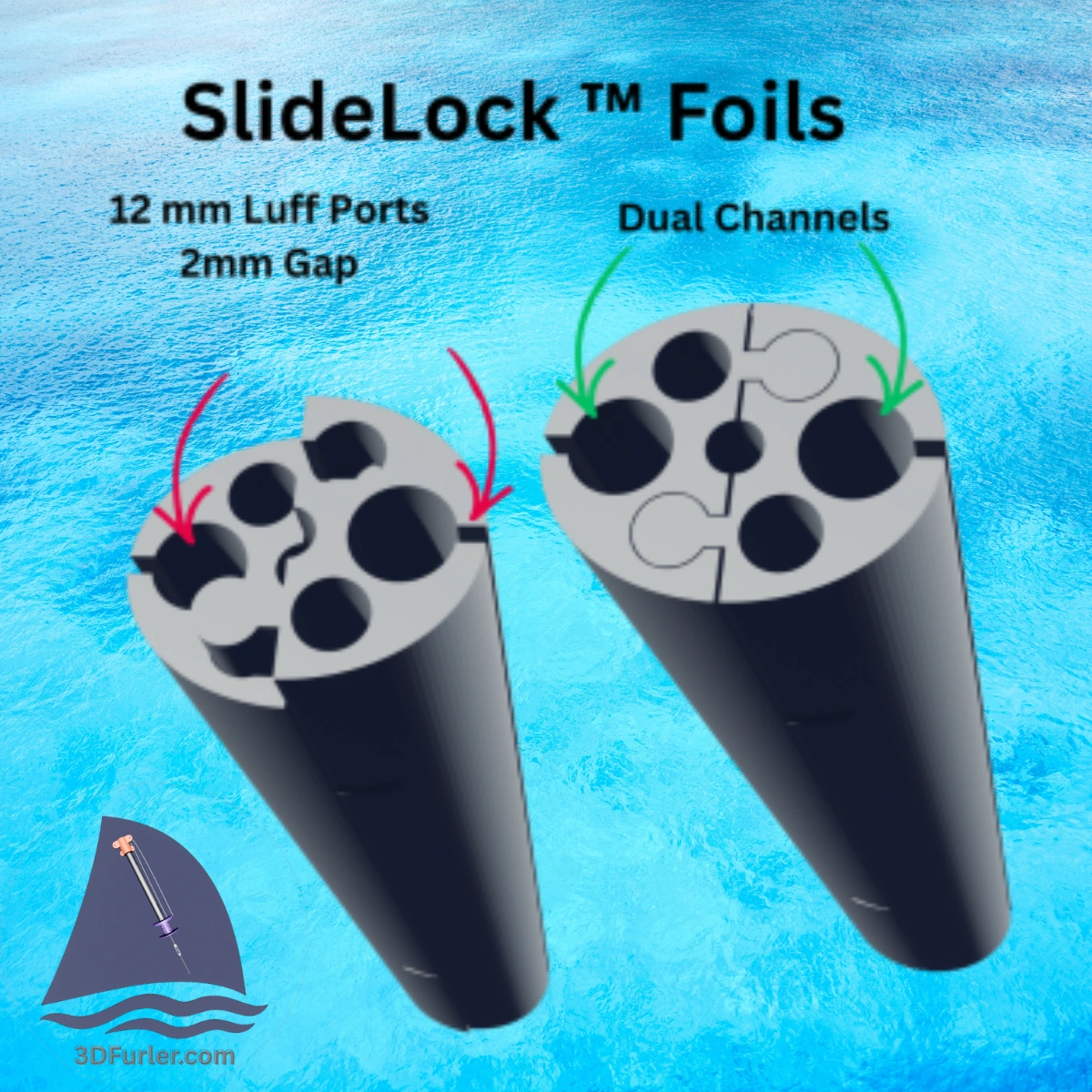
SlideLock Technology matters because it changes the build logic. Instead of relying on long extruded aluminum sections that need to be cut, handled carefully, and installed with more rig disruption, the system uses short interlocking foil sections. That design choice affects shipping, handling, deck-side installation, torsional behavior, and even how practical the product is for a DIY owner.
For a hands-on sailor, that is not a cosmetic difference. It changes the total cost of the project.
The core design difference
The standout feature is the foil architecture itself. The foils are 12 inches long and interlocked every 6 inches. Mechanically, that is a very different approach from long one-piece or multi-piece aluminum extrusions. Shorter sections are easier to package, easier to manage on deck, and less awkward when working in tight marina conditions or on a mooring.
More importantly, the interlocking structure is designed to increase torsional strength across the assembly. In plain terms, when you turn the drum, you want that rotational input to transfer efficiently up the foil and into the sail. If the structure twists inconsistently or has too much flex in the wrong places, furling feel gets sloppy. The SlideLock concept addresses that problem with frequent engagement points rather than relying on the stiffness profile of a long extrusion alone.
That does not mean every sailor will feel a dramatic difference in all conditions. On smaller recreational boats in moderate air, several systems can seem acceptable. The advantage tends to become more meaningful when owners care about repeatable furling response, cleaner engineering, and less compromise in installation.
Material choice is not a small detail
A serious SlideLock foil system review has to talk about material, because this is where many traditional assumptions break down. The system uses Acrylonitrile-Styrene-Acrylate rather than aluminum. For many sailors, that raises an eyebrow at first, mostly because marine hardware has trained buyers to equate metal with strength.
That shortcut does not always hold up. Aluminum is familiar, but it also brings weight and corrosion concerns. ASA offers a different set of advantages. It is lighter, corrosion-free, and better suited to controlled manufacturing strategies where strength can be focused in specific stress-prone areas. That kind of targeted reinforcement is not something extruded aluminum does well.
For furling systems, less weight aloft is never a trivial gain. It affects handling and overall rig behavior. On smaller and mid-size boats especially, shaving weight from the stay area can make sense beyond just ease of installation.
The trade-off is psychological as much as mechanical. Some owners still trust metal first because that is what they have known for years. If you are that buyer, the material shift requires you to judge the system by structural design and performance logic rather than by old category habits.
Installation is where the system separates itself
This is likely the most practical advantage for the target buyer. The system installs from the deck, in or out of the water, without rigging removal or mast climbing. That is a meaningful reduction in complexity, cost, and risk.
For DIY owners, this can be the difference between a realistic weekend project and a deferred upgrade that sits on the list for another season. For owners who would otherwise hire rigging labor, the labor savings are part of the product value, not a side note.
A lot of marine hardware gets evaluated only on the finished result. That misses the reality of ownership. Installation pain matters. The fewer steps that involve disassembly, cutting, hoisting, or going aloft, the less chance there is for delays, extra labor, or mistakes.
This does not mean every install is effortless. Boat-specific variables still matter. Stay length, sail setup, hardware clearance, and the owner's comfort level all affect the process. But reducing the install pathway to a deck-based procedure is a strong engineering advantage, not just a convenience feature.
Halyard wrap and seized bearings - two common failure points
One of the sharper design choices here is what the system avoids. There is no ship's jib halyard or swivel used, and the drum uses an axial bearing-free clamp-on design. Those choices target two familiar headaches in furling systems: halyard wrap and bearing failure.
Halyard wrap is one of those problems that can turn a normal day on the water into a frustrating mess quickly. If a furling design depends on hardware geometry that is easy to upset, owners end up troubleshooting instead of sailing. External halyards and the overall system architecture are meant to remove that problem from the equation.
The bearing-free drum deserves attention too. Bearings can work well, but they also add maintenance points and failure modes. Salt, grime, neglect, or age can turn a once-smooth system into a sticky one. Removing bearings from the design is a very direct way to reduce seizure risk.
There is an engineering mindset behind that choice: fewer moving parts, fewer things to fail. For many sailors, that is the right kind of simplicity.
Packaging, sizing, and why modularity matters
A complete system packaged in a 14 x 14 x 14-inch carton weighing less than 40 pounds tells you a lot about the product philosophy. This is not oversized marine hardware built around shipping inconvenience and dockside assembly chaos. It is modular by design.
That modularity also shows up in the availability of 32 pre-determined length packages from 20 to 50 feet with no cutting necessary. For the customer, that means sizing is standardized in a useful way. You are not being pushed into a field-fabrication exercise just to make the system fit your boat.
That matters because cut-to-fit products often shift precision work onto the buyer or installer. Pre-determined sizing reduces variability and saves time. It also supports cleaner installation planning.
An optional bright orange Search and Rescue top assembly is a niche feature, but a smart one. Some owners will see it as extra visibility value, especially where easier spotting from overhead could matter.
Where this system fits best
This type of furling solution makes the most sense for boat owners who value mechanical simplicity, lighter hardware, and retrofit-friendly installation. It is especially well aligned with DIY sailors, coastal cruisers, and owners of small to mid-size boats who do not want a traditional foil project turning into a rigging event.
It also fits buyers who are tired of category assumptions. If you are willing to trade familiar aluminum hardware for a more modern material strategy and a more install-friendly design, the system has a clear logic.
If your buying style leans heavily toward legacy brands simply because they have been around longer, you may need more time to evaluate the shift. That is fair. Furling systems are not impulse purchases. They sit at the intersection of safety, sail handling, and rig confidence.
SlideLock foil system review - the trade-offs to consider
No credible review should pretend every innovation is automatically right for every owner. The main trade-off here is that the design breaks with long-standing marine hardware conventions. Some sailors like convention because it feels predictable.
There is also a mindset adjustment in comparing engineered polymer components to aluminum. Even when the design case is strong, some buyers will need proof in use, not just theory. That is common in marine categories where materials and methods change slowly.
The other reality is that a better installation pathway does not remove the need for proper sizing and setup. A smarter system still has to be matched to the boat correctly. Good engineering reduces avoidable problems, but it does not replace fitment discipline.
Still, when you weigh those considerations against the gains - deck installation, no rigging removal, no mast climbing, corrosion-free parts, reduced weight, no halyard wrap, and no bearings to seize - the value proposition is unusually direct.
One company that has pushed this approach furthest is 3DFurler.com, and the reason it stands out is not marketing style. It is the fact that the product solves several common furling pain points at the design level rather than treating them as owner maintenance issues.
For sailors who prefer hardware that is easier to live with, not just easier to admire on a spec sheet, that is the right place to start. The best upgrade is usually the one that removes future problems before they ever show up at the dock.