G-Force and 3DFurler
Because the 3DFurler does not require or use an anchoring device due to its design, we get a few questions for people asking how it doesnt "float up" in a large wave,
The answer may surprise some of you.

A Scientific Analysis of Forestay Roller Furlers, Vertical Loading, and Wave‑Induced Apparent Weight Variations.
This paper examines the dynamic vertical loading experienced by a forestay‑mounted roller‑furling system aboard a 42‑ft, 28,000‑lb monohull sailboat. Using sinusoidal heave modeling, we quantify how wave height and wave period influence the apparent weight of a 120‑lb furling drum/foil assembly.
We derive the conditions under which the system experiences partial unloading, full weightlessness, and negative apparent weight. Results show that sea states such as 15 ft waves, 4.5–11 s periods do not induce weightlessness, while extreme short‑period steep waves over 30 feet are required to reach zero or negative apparent weight.
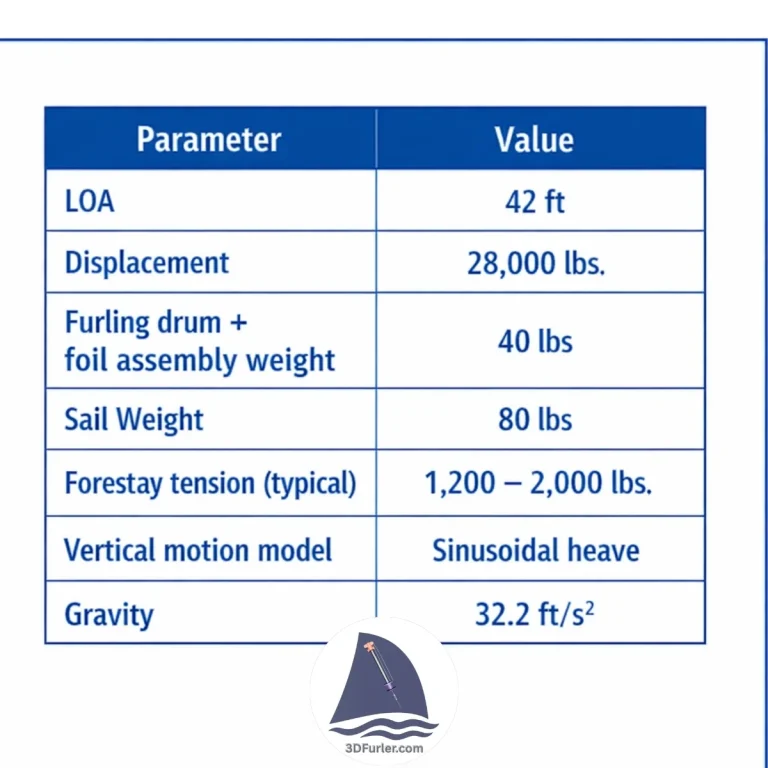
Forestay roller furlers rely on compression between the top, drum and the foil stack to maintain longitudinal integrity. The system should be designed to remain unified under both static forestay tension and dynamic vertical accelerations transmitted through the rig.
Understanding vertical dynamic loading is essential for:
- Predicting peak compression loads
- Ensuring the drum halves cannot separate
- Evaluating extreme‑sea‑state survivability
- Designing safe installation tolerances
This paper models the vertical acceleration environment and quantifies the resulting apparent weight of the furling assembly.
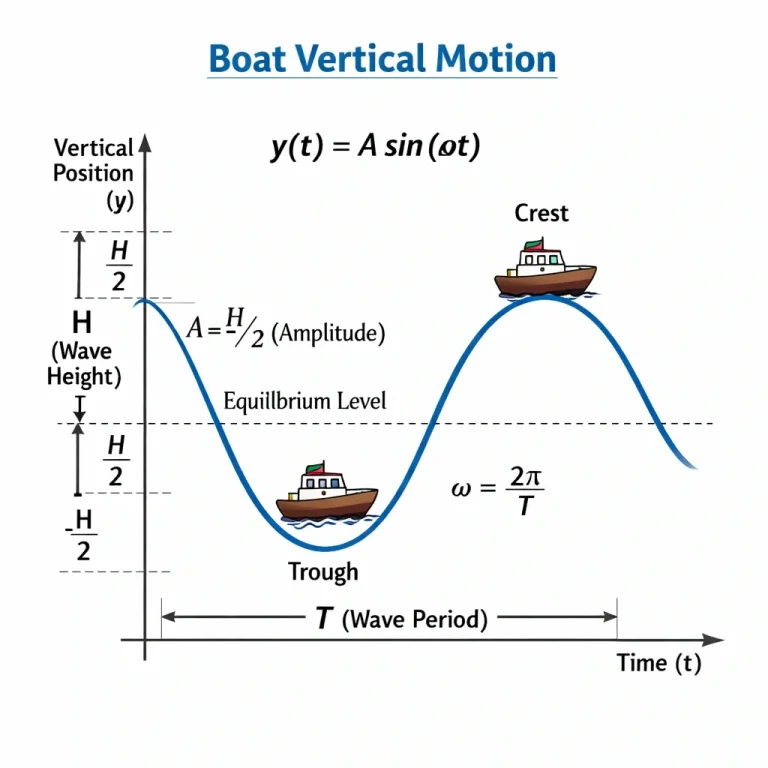
Wave Height Required for Weightlessness
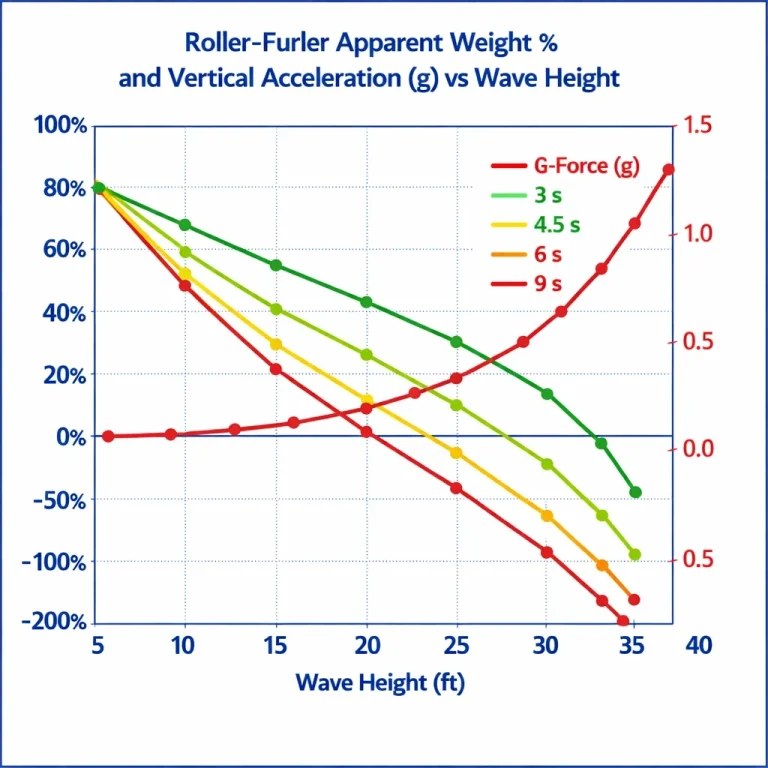
Our calculations prove that to experience weightlessness in any average sixe sailboat , wave heights would need to be over 32 feet with a peroid of 9 seconds.
Conclusion: Most pleasure craft will never experience waves of this magnitude and those that did, would certainly have more to worry about than weighlesness and losing equipment.