60 Years After Fiberglass, Polymer Extrusion Is the
Next Marine Revolution
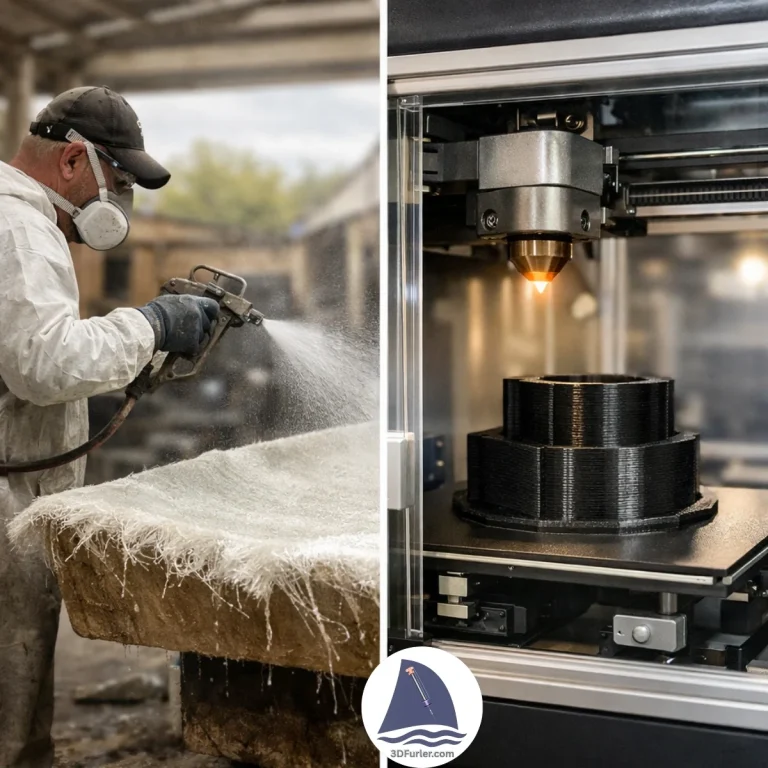
For decades, sailors have trusted fiberglass — and for good reason. It revolutionized boatbuilding and surprised everyone still floating around 60 years later.
Everyone that is, except the chemical engineers who understood that Polymers are the base DNA of Polymer Extrusion
But somewhere along the way, a myth took root among sailors that vital parts on boats must be made of stainless, aluminum, bronze or wood.
Back in the 1970’s The Auckland Tool & Gage Company (New Zealand) created the first tooling for polymer seacocks, valves, and thru‑hulls. It was not until the mid-1980’s that the US market was introduced to Marelon™ Fittings and to this day have not managed to convince all the “old salts” to convert from Bronze.
Fiberglass & Polymer defined:
Fiberglass is made with glass fibers embedded in a polymer resin, where the polymer binds, shapes, and transfers loads while the fibers provide strength and stiffness.
3D Polymer printing fuses molten polymer layers under controlled heat, where the polymer self‑bonds, shapes precisely, and transfers loads through uniform, moisture‑free, dimensionally stable structures.
Let’s compare the real manufacturing environments behind each material.
1. Fiberglass Components Are Built in Open Air — With Moisture Present Every Second
Fiberglass is laid up in humid air, exposing cloth, resin, and curing to moisture. Trapped humidity causes osmosis—blisters, delamination, and weakening—fueling a billion‑dollar repair industry.
2. 3D‑Printed ASA Is Extruded at 240–270°C — A Zero‑Moisture Environment
ASA is a marine‑grade polymer extruded at 240–270 °C, where all moisture is instantly vaporized. Each layer bonds in a zero‑humidity environment, forming a sealed, non‑porous structure immune to osmosis. Unlike fiberglass—laid up in humid air and vulnerable to moisture intrusion—ASA is created in sterile, superheated conditions, producing dimensionally stable, moisture‑proof parts every time.
3. Fiberglass Is a Composite — ASA Is a Polymer. Both Are Marine Materials.
Fiberglass resin is a polymer. ASA is a polymer.
They are cousins. Fiberglass is a composite: glass fibers provide strength while a polymer resin acts as the matrix. ASA, by contrast, is a single polymer, not a composite. Yet both are marine‑grade polymer systems — one uses polymer as a binder for fibers, the other is the structural polymer itself — proving sailors already rely on polymers whether they realize it or not.
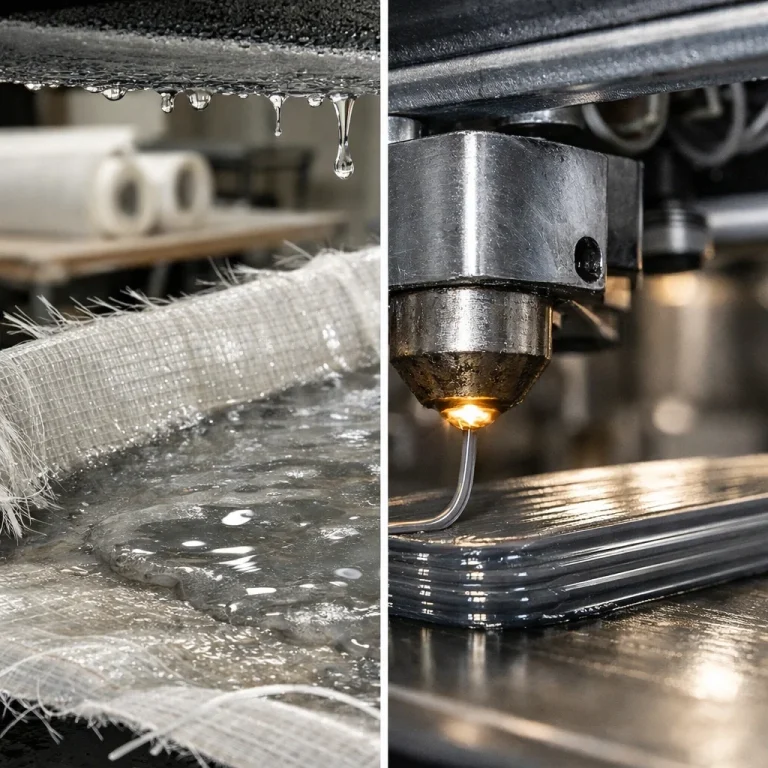
4. Fiberglass Layup Is Manual. 3D Extrusion Is Precision‑Controlled.
Fiberglass layup is a manual, craft‑driven process—every layer depends on human technique, resin saturation, roller pressure, and ambient conditions. ASA extrusion is the opposite: a machine‑controlled polymer process where temperature, flow rate, and bonding are governed by precise, repeatable parameters. One varies with the worker and the weather; the other is identical every time.
5. Fiberglass Can Hide Internal Defects. ASA Cannot.
Fiberglass can trap hidden flaws because resin layers cure in humid air, allowing moisture, air pockets, dry spots, and uneven saturation to become buried beneath cloth and gelcoat. These defects stay invisible for years until blisters or delamination appear.
ASA extrusion cannot hide defects—each layer is visible, uniform, and formed in a sealed, moisture‑free, high‑temperature environment.
6. Fiberglass Is Repairable. ASA Is Easily to do both.
Fiberglass can be repaired through grinding, drying, and re‑laminating damaged laminate. ASA can be acetone welded. Or defective or worn parts are simply reprinted and replaced, restoring full strength with zero structural guesswork.
Conclusion
It’s highly unlikely any of us would buy a disposable yacht anytime soon, but with the high cost of metals and labor, the shrinking of the labor work force and the accuracy and reliability of 3D Polymer Extrusion , it the way to go on many parts and systems.
3DFurler.com is the world’s leader in making Roller Furler systems exclusively from Extruded Polymers.