Jib Furling System for Cruising: What Matters
Cruising gear lives in the real world. It has to work when the boat is pitching, when the sail is partly loaded, and when the crew wants less drama on the foredeck. A jib furling system for cruising should do three things well: rotate consistently under load, protect against common failure points, and stay simple enough that maintenance does not become its own project.
That sounds obvious, but many furling problems come from systems that add parts without solving root issues. Extra hardware can mean extra weight aloft, more corrosion points, more alignment sensitivity, and more opportunities for seizure or wrap. Cruising sailors usually benefit more from controlled simplicity than from complexity sold as refinement.
A good starting question is this: what are you really trying to reduce? For most owners, the answer is some mix of deck work, mast work, weight, and mechanical surprises. Once you know that, the buying criteria get clearer.
The biggest trade-offs in cruising furlers
Most furling systems ask you to balance strength, weight, serviceability, and ease of installation. The wrong choice usually happens when one of those factors gets ignored.
Aluminum has long been the default material in marine hardware because it is familiar and structurally capable. But it also adds weight, can corrode, and relies on manufacturing methods that do not allow much variation in localized strength. Modern polymer-based components, when engineered correctly, change that equation. A corrosion-free part with strength concentrated where the load actually lives can reduce weight and solve a real marine problem at the same time.
That does not mean every plastic part belongs on a sailboat. It means material choice should be judged by engineering, not habit. If the part is designed around UV resistance, load path, torsional stress, and marine exposure, it deserves a serious look. If it is simply replacing metal to cut cost, that is different.
The second trade-off is installation. Some furlers still assume rigging removal, mast climbing, or a rigger’s schedule. For many owners, that is a hidden cost larger than the hardware itself. A system that installs safely from the deck, in or out of the water, changes the ownership experience. It cuts labor, reduces injury risk, and makes seasonal work easier to control.
Then there is the issue of moving parts. Bearings, swivels, and internal halyard arrangements can perform well, but they also introduce maintenance and failure points. Cruisers should pay close attention to any component that can seize, bind, or create halyard wrap. A cleaner mechanical layout often wins over time.
Halyard wrap, seized bearings, and other avoidable problems
The most frustrating furling issues are usually not dramatic breakages. They are repeat annoyances that make the system unpredictable.
Halyard wrap is one of the best examples. When the halyard wraps around the foil instead of allowing the sail to furl cleanly, the result can be jammed operation, line damage, and sail handling that gets ugly in rising wind. Many sailors treat this as a tuning issue alone, but in many systems it is also a design issue. If the setup depends heavily on perfect geometry and multiple interacting parts, it gives wrap more chances to happen.
Seized bearings are another common headache. Bearings can feel smooth when new, then become less impressive once salt, age, load cycles, and neglect do their work. For a cruising sailor, bearing-free design has a real advantage if it still delivers reliable rotation. Fewer vulnerable moving parts usually means fewer surprises.
Foil design matters too. Long foil sections may seem straightforward, but short interlocking sections can offer practical benefits in shipping, handling, and torsional performance when the connection method is engineered properly. Torsional strength is not just a spec-sheet term. It affects how quickly and evenly furling input at the drum becomes rotation up the stay.
Why installation design matters as much as sailing performance
Cruisers tend to evaluate hardware by how it sails. That is fair, but install and service design deserve equal weight. If a system requires cutting foils, pulling rigging apart, or climbing the mast, the project becomes bigger, riskier, and more expensive.
A modular system with predetermined lengths has an obvious practical advantage. It reduces fitting errors, speeds installation, and makes it easier for owners to choose a package that matches the boat without machining parts on site. When the system arrives compact, manageable, and ready to assemble, it fits the way most DIY sailors actually work.
This is where modern manufacturing has changed the conversation. A compact furling system that ships in a small carton and weighs under 40 pounds is not just easier to deliver. It is easier to move around the boat, easier to handle during install, and less likely to turn setup into a two-person wrestling match.
For the owner who does his or her own upgrades, that matters. Convenience is not fluff when it removes actual barriers to maintenance and installation.
A better way to judge engineering claims
Every manufacturer says its system is strong, smooth, and easy. The better question is what features support those claims.
Look at the drum design. Is it simple, direct, and resistant to seizure, or does it rely on components that demand more maintenance? Look at the foil connection. Does it resist twisting under load, or is the length and joint design working against torsional transfer? Look at the halyard arrangement. Does it eliminate wrap by design, or just attempt to manage it?
Also look at compatibility. Many sailboat owners are retrofitting older boats, changing sail plans, or adapting hardware to real-world rigs that are not perfectly standard anymore. A system that can work around the stay wire in both forestay and behind-the-mast applications gives owners more room to solve problems without starting over.
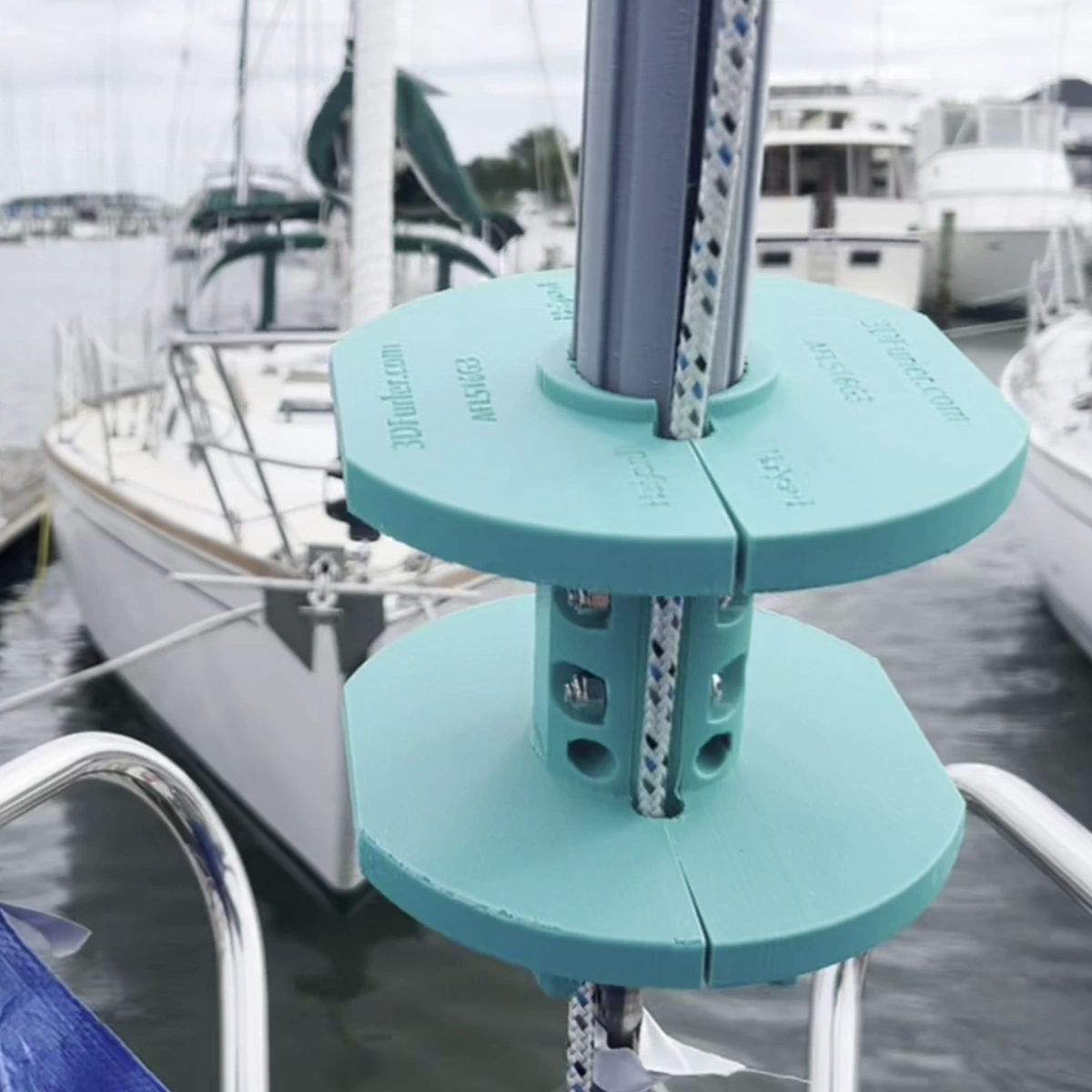
One modern example is 3DFurler, which takes a notably mechanical approach to these issues. Its design uses external halyards rather than a jib halyard and swivel, an axial bearing-free drum clamp, and short SlideLock Technology foil sections interlocked every 6 inches. The point is not novelty for its own sake. The point is eliminating halyard wrap, removing bearings that can seize, and building torsional strength into a lighter, corrosion-free system that installs from the deck without rigging removal.
That kind of engineering logic is what buyers should focus on, whether they are comparing systems for a weekend cruiser or a more active coastal boat.
When lighter is better, and when it is not
Sailors know that weight aloft matters, but it is easy to oversimplify. Lighter is usually better if the structure still handles load, impact, UV exposure, and repeated cycling. Lighter is not better if the weight was removed by weakening the system or ignoring high-stress areas.
This is where focused-strength manufacturing becomes more than a marketing phrase. If a part can be reinforced where stress concentrates instead of carrying the same profile everywhere, the design can become both lighter and more purposeful. That is a real advantage over uniform extrusions that are forced into one compromise shape for every load zone.
For cruising boats in the 20- to 50-foot range, these gains can be meaningful. Less weight, less corrosion, and fewer service-sensitive components all support the same goal: a furler that asks less from the owner over time.
How to choose the right system for your boat
Start with the rig and the way you actually sail. If your priority is easy seasonal handling and minimal service calls, installation method should be near the top of the list. If you sail shorthanded, clean furling under partial load matters more than race-style hardware complexity. If your current system has given you halyard wrap or bearing trouble, focus on designs that remove those failure points instead of just repackaging them.
Then look closely at package logic. Predetermined lengths, no-cut components, and clear sizing support reduce mistakes before the box even opens. That is not a small detail on a specialty purchase where one mismatch can stall the whole project.
Finally, be honest about maintenance tolerance. Some owners do not mind periodic disassembly, tuning, and bearing care. Others want a system that keeps working with as little intervention as possible. Neither approach is wrong, but they are not the same customer.
The right jib furling system for cruising is the one that fits your rig, reduces your most common failure risks, and makes sail handling simpler without adding hidden complexity. If the design solves real marine problems at the deck level, not just in the brochure, you will feel that difference every time the wind builds and the sail needs to come in clean.