How Does a Roller Furler Work?
A headsail that rolls in cleanly from the cockpit feels simple. Mechanically, it is not. If you have ever asked how does a roller furler work, the short answer is this: it transfers rotation from a drum at deck level up the headstay so the sail wraps around that stay in a controlled way. The useful answer is in the details, because reliability depends on how that rotation gets transmitted, how the sail is guided, and what failure points the design removes.
How does a roller furler work on a sailboat?
A roller furler is a rotating system built around the forestay, or in some applications behind the mast. Its job is to let you roll a sail around the stay to reduce sail area or stow the sail without going forward and wrestling fabric on deck. When you pull the furling line, you rotate a drum. That drum turns the lower part of the furling system, which in turn rotates the foil sections wrapped around the stay. Since the sail's luff is attached to that rotating structure, the sail rolls up.
To deploy the sail, you ease the furling line while controlling the working sheet. Wind pressure helps pull the sail open as the foil rotates the opposite direction. In a well-matched system, the process feels balanced. In a poor one, it feels sticky, uneven, or overloaded.
That basic motion sounds straightforward, but a furler has to manage torsional loads, side loads, sail shape, and saltwater exposure at the same time. That is where design differences start to matter.
The core parts that make a roller furler work
At the bottom is the drum. This is where the furling line winds as you pull it. The drum converts line tension into rotational force. If the drum geometry is poor, if line stacking is uneven, or if bearings bind under load, the system gets harder to operate right when you need it most.
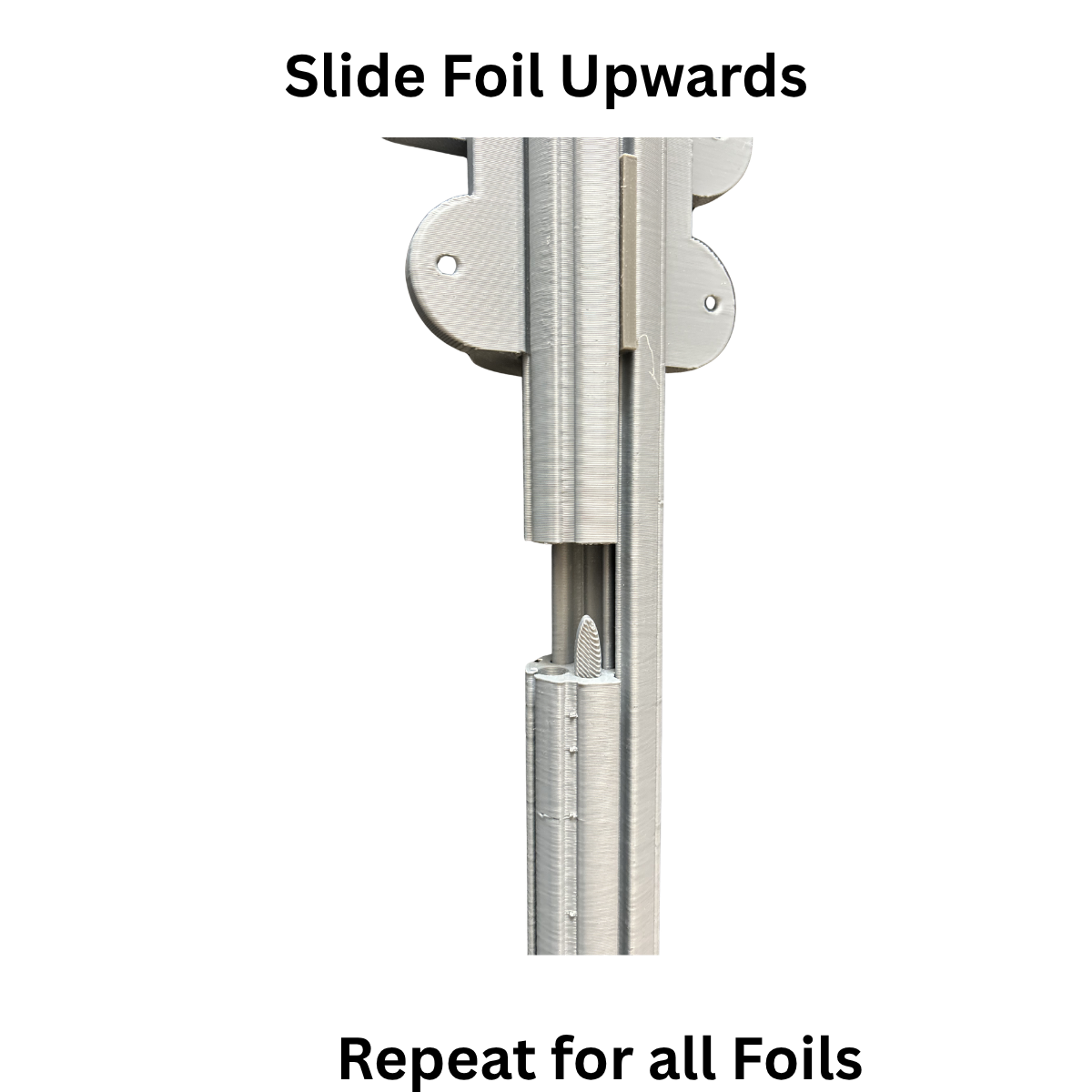
Above the drum is the rotating foil assembly around the stay wire. Think of the foil as the torque path. Its job is to carry rotational force from the drum up the length of the sail. If that force is lost to flex, slop, or weak joints between sections, the lower part of the sail may start rolling while the upper part lags behind. That is one of the most common reasons furling feels rough or incomplete.
The sail itself attaches along the luff, usually through a luff tape that feeds into the foil groove. Once hoisted, the sail becomes part of the rotating package. When the foil turns, the sail turns with it.
Many conventional systems also use a halyard swivel at the top. That swivel lets the sail rotate independently while still being hoisted by the jib halyard. It can work well, but it adds another moving part. If geometry is off, it can also contribute to halyard wrap, where the halyard starts winding around the stay instead of staying clear.
What actually happens when you furl the sail
When you pull the furling line, the drum rotates and begins wrapping that line around itself. At the same time, the foil rotates around the headstay. The sail's luff rotates with the foil, and the sail starts wrapping from the luff outward.
The clew is still controlled by the sheet, so proper furling requires some sheet tension. Too little tension and the sail wraps loosely, which creates a bulky, uneven roll. Too much and you overload the system. The sweet spot is enough resistance to keep the wrap tight without forcing the drum.
As the sail rolls up, its exposed area gets smaller. That reduces drive, which is why furling is useful not just for stowage but also for reefing a headsail in rising wind. That said, not every sail shape reefs equally well. A sail designed for furling usually includes foam luff padding or shape controls that help maintain a usable profile when partially rolled.
Why some furlers feel smoother than others
The answer is not just bearings. Smooth operation comes from the whole load path. The drum has to turn efficiently, the foil has to transmit torque without excessive twist, and the installation angle has to keep the furling line feeding cleanly.
Foil construction is a major factor. Long extruded sections can work, but they are not the only way to build torsional strength. Shorter interlocking sections can create a strong torque path while also improving packaging, handling, and installation flexibility. If the connection between sections is engineered properly, the system resists twist where it counts instead of depending on one long, heavy shape.
Material choice matters too. Aluminum became the default in older marine hardware because it is familiar and rigid. But it is not automatically the best answer for every furling system. Advanced polymer construction can cut weight, eliminate corrosion at the foil level, and allow strength to be concentrated in high-stress areas instead of carrying unnecessary mass everywhere else. That difference becomes especially relevant on smaller and mid-size boats where weight aloft changes handling.
How does a roller furler work without halyard wrap?
Halyard wrap happens when the halyard is allowed to angle into the rotating upper section in a way that lets it wind around the stay. Once it starts, furling gets harder fast, and damage can follow. In many legacy systems, preventing that problem depends on exact halyard lead angles, add-on restrainers, careful tuning, and a swivel that keeps everything aligned under load.
A different design approach is to remove the root cause instead of managing it. Systems that use external halyards and do not rely on a ship's jib halyard or top swivel can eliminate the wrap scenario entirely. That is a cleaner mechanical solution because it removes a failure mode rather than asking the installer to work around it.
The same logic applies to bearings. Bearings can reduce friction, but they can also seize, corrode, or become contamination points. A bearing-free axial drum design changes the maintenance picture. It is not about adding more parts to improve operation. It is about reducing the number of parts that can stop it.
Installation affects performance more than most sailors expect
A roller furler is only as good as its alignment and fit. If the drum is mounted incorrectly, if the line lead is poor, or if foil joints are stressed during assembly, the system may work on the dock and disappoint under sail.
This is why installation method matters. Traditional furlers often require rigging removal, foil cutting, or mast work. That adds labor cost and introduces opportunities for measurement errors. It also pushes many owners into a yard or rigger schedule when they would rather do the job themselves.
A deck-installable system changes the equation. If it can be installed safely from the deck, in or out of the water, without removing rigging or climbing the mast, the mechanical benefit is more than convenience. It reduces setup complexity, avoids disturbing standing rig tension, and lowers the chance of injury during installation. For a hands-on boat owner, that is a meaningful design advantage, not a marketing extra.
What makes a roller furler strong enough under load?
Strength in a furler is not just about surviving static tension from the headstay. The harder challenge is handling repeated torsional loads while the boat pitches, the sail powers up, and the system is operated under varying sheet pressure.
That means section joints, drum attachment, and material behavior under cyclic load matter as much as raw stiffness. A furler that feels heavy and overbuilt is not always stronger where it counts. Smart engineering puts reinforcement in stress-prone zones and avoids dead weight in areas that do little work.
This is where modern manufacturing methods have real value. Focused infill strength in printed ASA components allows the part to be engineered around actual load paths. That is a different approach from extruding a uniform metal shape and accepting its weight and corrosion profile as the cost of doing business. For sailors comparing systems, the question is not which material sounds more traditional. It is which design better handles marine use with fewer compromises.
When furling performance depends on the sail, not just the hardware
Even the best furler cannot fix a badly cut or poorly matched sail. If the luff tape is the wrong size, if the sail is too stretched, or if UV cover bulk is excessive, furling will suffer. Partial reefing also changes sail shape, and some genoas become inefficient when rolled down beyond a certain point.
So yes, the hardware matters. But furling quality is always a system question. Sail condition, halyard tension, sheet control, lead angle, and fair drum loading all play a role. If a boat owner says, "My furler is hard to turn," the cause may be friction in the system, but it may also be sail load, poor wrap tension, or incorrect setup.
That is why the best furling systems are designed to be mechanically simple and installation-tolerant. Fewer variables mean fewer problems to chase later.
One modern example is 3DFurler, which uses short interlocking foil sections, an axial bearing-free drum clamp design, and external halyards to remove halyard wrap from the equation entirely. That combination speaks to a broader point: the best answer to a furling problem is often a design that avoids the problem in the first place.
A roller furler works by turning line pull into controlled sail rotation. The real question is how efficiently, how safely, and with how many parts standing between you and a clean furl when conditions get busy. If you are evaluating systems, pay less attention to tradition and more attention to the load path, the installation method, and the failure points the design has already eliminated.