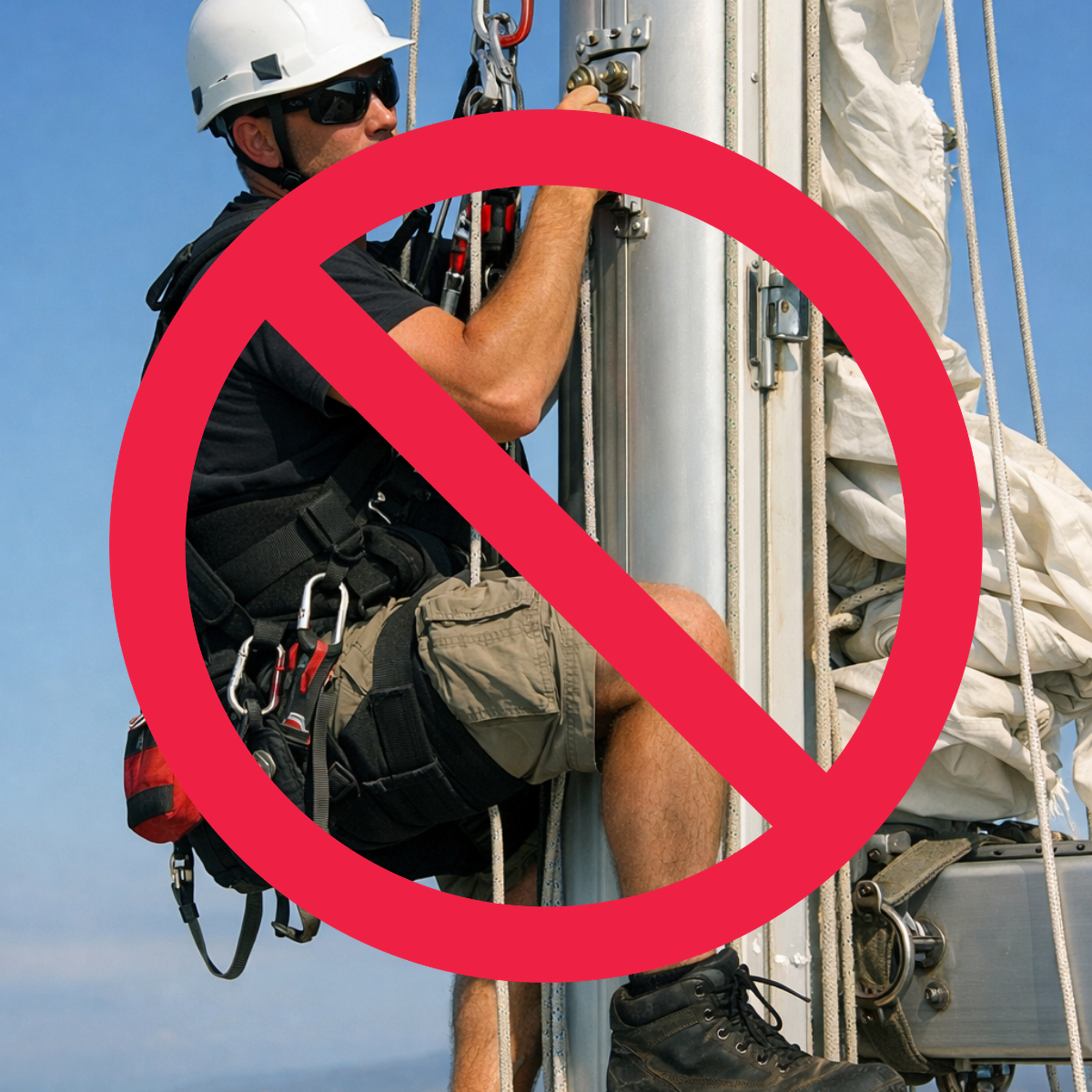
Do Furlers Need Rigging Removal?
Ask a sailor about furler installation and the answer usually comes with a sigh, a yard estimate, or a story about going up the mast. That is why the question do furlers need rigging removal matters so much. For many boat owners, the real cost of a furler is not just the hardware. It is the labor, downtime, and risk tied to taking apart standing rigging or sending someone aloft.
The short answer is this: some furlers do, some do not. Traditional systems often require at least partial rigging disassembly because the foil sections must be fed over the stay from one end. That usually means disconnecting the forestay, lowering mast tension, or unstepping hardware at one end of the stay. But not every design works that way. Modern systems built around shorter interlocking foil sections and deck-level installation can avoid rigging removal entirely.
Do furlers need rigging removal on every boat?
No. The need for rigging removal depends on the furler design, not just the boat.
That distinction gets missed all the time. Boat owners assume furlers are automatically a rigging project because that has been true for many legacy systems. Long foil extrusions, internal halyard arrangements, and top-down assembly methods tend to push the installation toward a rigger's workflow. If the system needs to slide onto the stay in one direction with large sections, the stay often has to be opened up to make room.
A different design changes the whole job. If the foil is made from short modular sections that interlock around the existing stay wire, the install can happen from the deck. If the drum clamps on without bearing cartridges, and the sail uses external halyards instead of a swivel riding up the foil, even more complexity disappears. At that point, the furler stops being a mast-and-rigging event and becomes a hardware retrofit.
Why traditional furlers often require rigging removal
The main reason is geometry. Many older furler systems use long foil sections that must be assembled in a straight line over the forestay before the system is tensioned back into place. There is no practical way to do that on a fully rigged boat without freeing one end of the stay.
That creates a chain reaction. Once the stay is disconnected, the mast may need support, the turnbuckle setup has to be managed, and headstay length tolerances matter more. On some boats it is straightforward. On others, especially smaller boats with limited working room or older hardware, the installation becomes more of a rigging project than owners expected.
There is also the issue of halyard management. Many conventional systems rely on a swivel at the top of the stay and use the boat's jib halyard in a way that can create wrap if lead angle is not right. Solving that may require additional mast hardware or adjustments aloft. So even if the forestay itself is not fully removed, mast climbing can still enter the picture.
None of that means those systems cannot work well. Many do. But they often carry installation assumptions that belong to a different era of marine hardware - one where boat owners expected more yard labor and accepted it as part of the process.
When a furler can install without removing rigging
A furler can skip rigging removal when its parts are designed around the stay that is already on the boat rather than forcing the stay to adapt to the furler.
That usually means three things. First, the foil sections are short enough to be handled on deck and assembled around the wire. Second, the drum and lower hardware clamp on without requiring bearing stacks or complex machined housings. Third, the sail handling method avoids a swivel and the halyard-wrap problems that come with it.
This is where engineering matters more than tradition. A system using short, interlocking foils creates a different load path than long aluminum extrusions. If those sections lock frequently, torsional strength can be built into the assembly while still keeping installation modular. That is a practical design decision, not a marketing feature.
A system like 3DFurler is built around that idea. Its 12-inch foil sections interlock every 6 inches, which allows installation from the deck in or out of the water with no rigging removal and no mast climbing. That changes labor, safety, and logistics in one move.
The trade-off is not quality versus convenience
Some sailors hear "no rigging removal" and assume that means lighter-duty hardware or a shortcut in strength. That is the wrong comparison.
The real comparison is between one design philosophy and another. Traditional aluminum furlers depend on long extruded sections and conventional bearing arrangements. Newer systems can use different materials and modular geometry to solve the same mechanical problem in a more installation-friendly way.
Material choice matters here. Extruded aluminum has been the standard for a long time, but it is not the only route. Advanced ASA-based parts made through 3D manufacturing can reduce weight, eliminate corrosion in the foil components, and place strength where the loads actually occur. Focused infill and localized reinforcement are engineering options that do not exist in the same way with uniform extrusions.
That does not mean every boat should switch automatically. It does mean boat owners should stop equating old installation methods with higher integrity. If a furler installs without pulling rigging because it was designed intelligently, that is not a compromise. That is better problem solving.
What to check before assuming you need a rigger
Start with the furler's assembly method. If the manufacturer requires feeding long foil sections over the stay from one end, expect some level of stay disconnection. If the instructions mention mast work, halyard diverters, or upper swivel alignment, expect more labor.
Then look at the sail handling system. Internal halyard designs can be perfectly serviceable, but they add components and setup constraints. External halyard systems simplify the top end and remove one of the common causes of operational trouble - halyard wrap.
Also check packaging and sizing. A furler shipped in a compact carton with predetermined lengths usually signals a modular installation approach. A system that arrives as long extrusions tells you something before you even open the box.
Finally, consider where the boat is and how you work. If the installation can be done safely from the deck while the boat is in the water, that is not just a convenience issue. It can eliminate haul-out scheduling, reduce downtime, and let a technically capable owner handle the project without yard coordination.
Do furlers need rigging removal for behind-the-mast setups?
Not always, but design matters even more in those applications.
Behind-the-mast furling can be awkward because clearances are tighter and access is less forgiving than a straightforward forestay installation. Systems that demand large assembly space or top-end service become harder to live with. A modular clamp-on approach is often better suited because it can be installed and serviced with less disruption to the rest of the rig.
This is one reason compatibility claims should be examined carefully. A truly adaptable furler is not just one that fits a wire diameter. It is one that can be installed and operated without forcing major changes to the surrounding rig architecture.
The better question to ask
Instead of asking only do furlers need rigging removal, ask what part of the installation forces rigging removal in the first place.
That question gets you to the engineering. Does the foil demand stay access from the end? Does the system rely on mast-top hardware? Does it need bearings that can seize, bind, or complicate the lower assembly? Does it create halyard management problems that have to be solved somewhere else?
When you ask those questions, the market separates quickly. Some furlers still assume you will pay for labor, climb the mast, and treat installation as a specialized event. Others are designed for the way many owners actually want to work - from the deck, with predictable parts, fewer failure points, and no unnecessary rig disruption.
If your goal is reliable furling without turning the boat into a rigging project, the right answer is not to accept removal as normal. It is to choose a system that was engineered so you never had to start there.