Best Sailboat Furler for Small Boats?
On a small sailboat, bad furling gear shows up fast. You feel it in extra weight forward, see it in awkward sail shape, and pay for it when a simple upgrade turns into mast work, rigging removal, and a weekend lost at the yard. Choosing the right sailboat furler for small boats is less about buying the biggest name and more about matching the system to the way a lighter boat is actually used.
What small boats need from a furler
A 22-foot trailerable sloop and a 30-foot coastal cruiser do not ask the same things of their hardware, but they share one reality - small boats are less forgiving of excess weight, clutter, and installation complexity. Add too much mass to the headstay area and you change how the boat feels. Add too many moving parts and you create more places for friction, wear, and failure.
That is why a small-boat furler has to solve a narrower set of problems than many owners expect. It needs to furl consistently in real sailing conditions, keep the sail under control without adding unnecessary hardware, and fit the boat without a major rigging project. If the system requires mast climbing, stay removal, or custom cutting just to get started, the total cost goes up quickly.
For many owners, the real decision is not just whether to add furling. It is whether the system makes the boat easier to own.
Sailboat furler for small boats: what actually matters
The first factor is weight. Small boats are more sensitive to weight aloft and weight at the bow than larger cruising boats. Aluminum systems have a long history in the market, but they are not automatically the best fit for every smaller platform. Material choice affects not just weight, but corrosion behavior, packaging, and how the system handles localized stress.
The second factor is installation path. A lot of traditional furlers were designed around conventional rigging practices, which often means removing stays, working overhead, or relying on rigging labor. That may be acceptable on a larger boat already headed to the yard. It is a poor fit for owners who trailer, dry sail, or simply want to make upgrades from the deck.
The third factor is halyard management. Halyard wrap is one of the most common causes of frustration in headsail furling systems. On a small boat, where space is tighter and angles are less forgiving, a design that avoids wrap by design is more valuable than one that asks the owner to tune around it.
Then there is fit. Many small-boat owners get pushed into one of two bad options: an oversized general-purpose furler or a custom setup that requires cutting, adapting, and extra labor. A better approach is a modular system with known length options and clear sizing guidance, so the owner can order for the boat instead of fabricating around the product.
Why older furler designs can be a poor match
Legacy systems often assume that more hardware equals more capability. On paper, that can look reassuring. In practice, small boats benefit from simpler mechanical paths. Swivels, bearings, and added components can work well when maintained correctly, but they also create more places for drag, contamination, and seizure.
This is especially true in saltwater environments or for boats that sit for periods between uses. Bearings that are smooth at launch can become a maintenance issue later. A drum assembly that looked solid in the catalog can become one more bulky component competing for limited foredeck space.
That does not mean every traditional furler is wrong. It means small-boat owners should be more skeptical of complexity sold as premium engineering. Sometimes the better design is the one with fewer failure points.
Material choice is not a side issue
For a sailboat furler for small boats, material selection has direct mechanical consequences. A lighter system reduces handling burden during installation and can improve the boat’s response by avoiding unnecessary weight where it matters most. Corrosion resistance matters too, especially for owners who keep boats in saltwater, trailer long distances, or do not want another polished metal assembly to maintain.
Modern ASA-based manufactured components bring a different value proposition than extruded aluminum. They can be engineered with strength concentrated where stress actually occurs rather than relying on a uniform extrusion profile. That matters in torsional loads, drum loads, and repeated use cycles. It also changes how the system can be packaged and shipped.
One modern example is 3DFurler, which uses 3D-manufactured ASA components, interlocking short foil sections, and a bearing-free drum clamp design. That architecture is aimed directly at small-boat realities: lower weight, no corrosion-prone metal foil sections, and a compact package that is easier to handle before it ever reaches the boat.
Installation should not require a rigging project
This is where many owners either move forward with confidence or abandon the idea. If adding furling means taking apart the headstay, hiring a rigger, or climbing the mast, the upgrade becomes harder to justify. The labor cost alone can rival the hardware cost on a smaller boat.
A better install path is deck-based and modular. Systems built around shorter interlocking foil sections can be assembled around the stay wire without disassembling the rig. That matters whether the boat is in the water or on the trailer. It also reduces safety risk because the owner is not forced into overhead rigging work just to complete a straightforward retrofit.
The practical benefit is bigger than convenience. Simpler installation makes the product usable by the audience most likely to buy it: owners who do their own work, want predictable fit, and would rather spend time sailing than coordinating yard labor.
Halyard wrap and seized bearings are not small problems
A furler can look good in the slip and still become a headache once loaded up under sail. Halyard wrap is one of those issues that often gets treated like operator error, when in many cases it is a design sensitivity. If the system depends on a narrow setup window to avoid wrapping, the owner is left managing a known weakness.
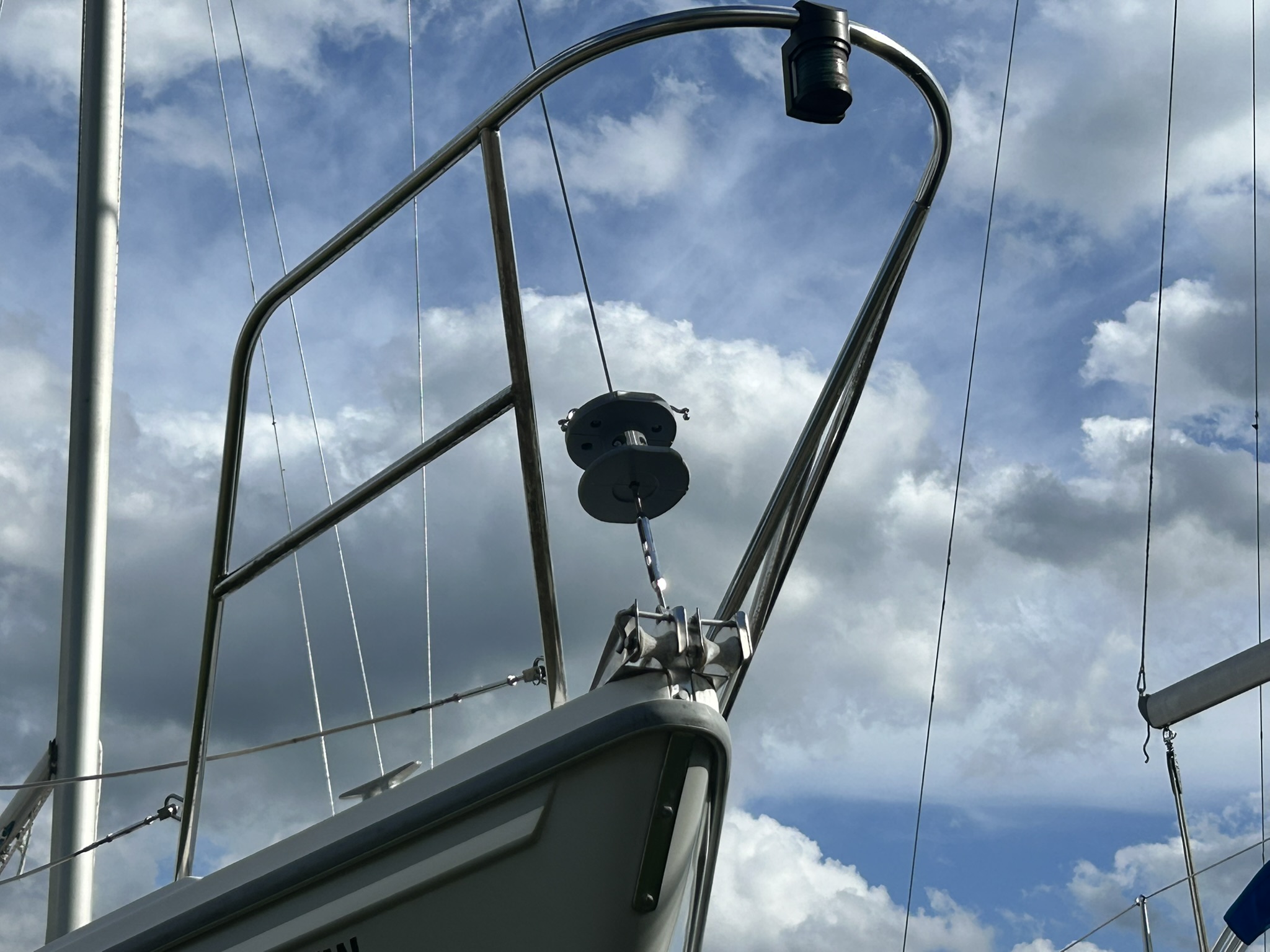
That is why external halyard designs deserve serious attention on smaller boats. Eliminating the ship’s jib halyard and swivel changes the problem entirely. No swivel means one less moving part. No halyard wrap by design means less tuning and fewer surprises when conditions get less forgiving.
The same logic applies to bearings. Bearings can feel smooth when clean and lightly loaded. They can also seize, wear, or require maintenance that small-boat owners do not want. A bearing-free drum approach removes that failure point altogether. It is a straightforward engineering choice: fewer components, fewer service issues.
Fit, sizing, and modular packaging matter more than most buyers think
Small-boat owners often live with compromises because marine hardware is sold in broad ranges. That can lead to cutting foil sections, adapting components, or settling for a system that technically fits but is not optimized.
Pre-determined package lengths are a better answer when they are well thought out. Known length options reduce guesswork and make ordering simpler. They also make installation cleaner because the owner is not improvising mid-project. If the system is offered across a wide enough range, it can cover a large segment of the small- to mid-size sailboat market without turning every order into a custom fabrication exercise.
Packaging matters too. A compact carton under 40 pounds is not just a shipping detail. It changes how a DIY owner receives, stores, transports, and stages the install. On small-boat projects, easier handling usually means faster completion.
When the cheapest option is not the lowest-cost option
A low purchase price can hide expensive downstream requirements. If the furler needs professional rigging labor, extra fittings, mast access, or repeated maintenance, the real cost rises fast. Owners of smaller boats feel that quickly because the upgrade budget is usually tighter and every add-on has to earn its place.
The better way to evaluate cost is total effort. Ask what the product requires before installation, during installation, and after a season of use. Ask how it handles corrosion, whether it introduces common failure points, and whether the system is sized and packaged for a straightforward retrofit.
That is where modern furling systems can separate themselves. The value is not just the hardware. It is the reduction in labor, maintenance, and complexity.
What to look for before you buy
If you are comparing furlers for a smaller sailboat, look past headline claims and focus on the mechanical path. Ask whether the system installs from the deck. Ask whether it requires rigging removal. Ask how it prevents halyard wrap. Ask what material is carrying the loads and how the design handles corrosion. Ask whether the foil sections are manageable on a smaller boat and whether the sizing options match your stay length without cutting.
A good furler should make the boat simpler to sail and simpler to maintain. If it adds labor, adds weight, or adds known trouble spots, it is solving the wrong problem.
On small boats, smart engineering is rarely flashy. It usually looks like lower weight, fewer parts, cleaner installation, and a design that respects how owners actually work on their boats. That is the kind of upgrade you appreciate the first time you furl from the cockpit and the tenth time you do not have to troubleshoot it at the dock.