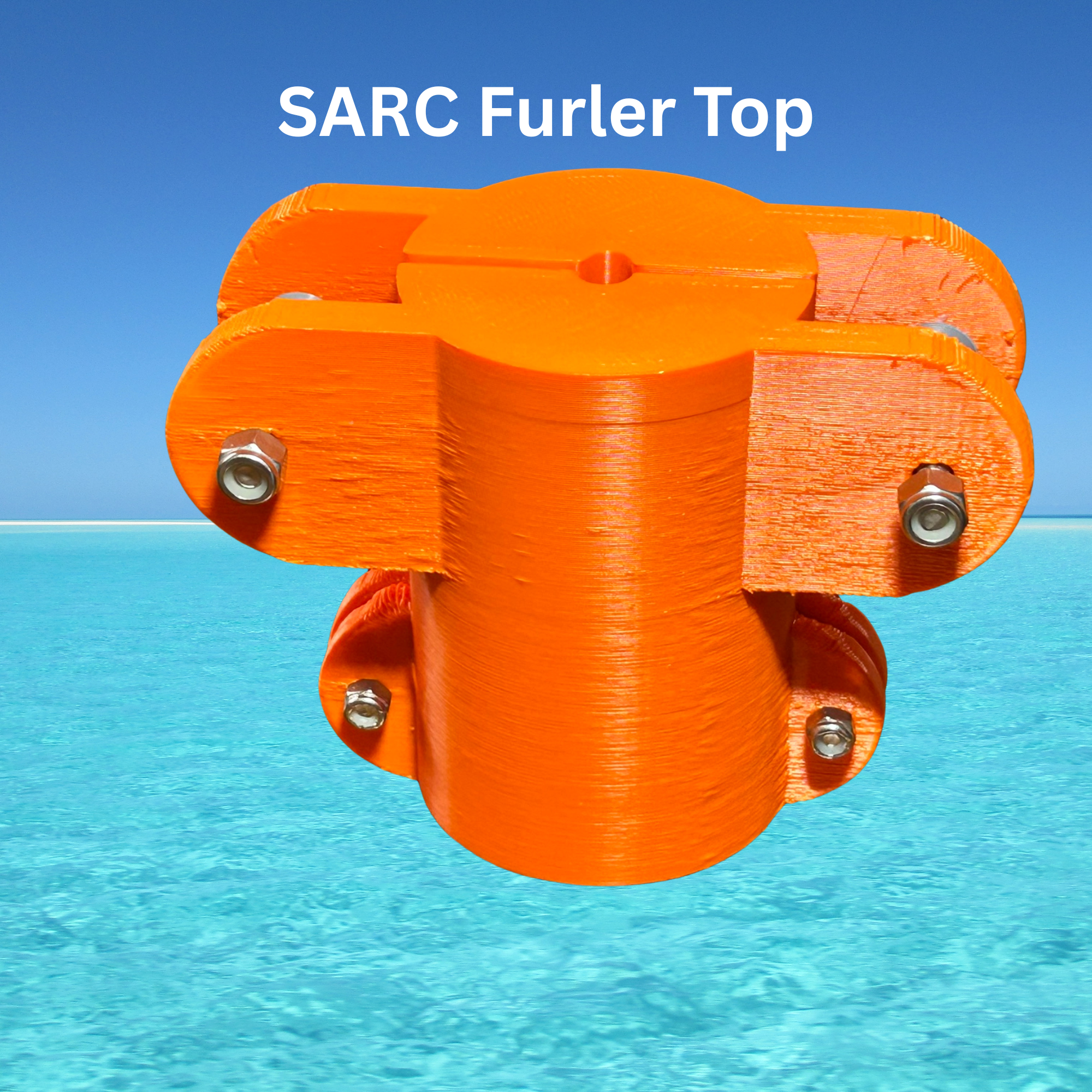
Search Rescue Top Visibility That Works
Most sailors spend more time comparing sail shape, furling load, and installation details than thinking about aerial detection. That makes sense right up until visibility drops and the boat is no longer easy to distinguish from whitecaps, haze, and shoreline clutter. Search teams do not always get a clean visual on a vessel's hull first. They often detect color contrast, motion, or an unusual shape that breaks the pattern of the water.
A bright top assembly helps because it places recognizable color above the deck line, where it is less likely to be hidden by spray, wave angle, or cockpit structures. From overhead, that can matter even more. Search aircraft are not looking at your boat the way another sailor at eye level would. They are scanning for anything that separates one target from a noisy background.
This is also one of those areas where small design choices stack up. A highly visible top section is useful on its own, but its value increases when the rest of the furling system avoids unnecessary bulk, corrosion, and failure points that can compromise deployment or reliability.
What actually improves search rescue top visibility
Color is the obvious factor, but not the only one. Bright orange works because it stands apart from the most common marine color palette - white sails, white decks, gray water, and blue sky. The right color choice creates contrast in a wider range of conditions than polished metal or low-saturation plastic ever will.
Placement matters just as much. A visible component near the top of the assembly gains a better line of sight than something mounted low near the drum or hidden behind the pulpit. Height does not guarantee detection, but it improves the odds that the marker remains visible as the boat pitches, rolls, or disappears between waves.
Shape and surface also play a role. A clean, defined component can be easier to identify than irregular hardware that visually blends into rigging. Search crews are trained observers, but they still benefit from contrast and simplicity. The less a part looks like every other dark or metallic fitting on a sailboat, the more likely it is to catch attention.
Then there is the issue of durability. A visibility feature only helps if it stays bright and intact over time. Marine hardware lives under UV exposure, salt, moisture, and constant motion. If the finish fades fast or the part corrodes, visibility degrades long before the owner notices.
Visibility is not a substitute for safety gear
This point matters. Search rescue top visibility is not a replacement for lights, AIS, radios, reflectors, flares, or sound signaling. It is one layer in a larger detection strategy. The value is additive, not standalone.
That does not make it minor. In the real world, search success often depends on overlapping cues. A bright top assembly can support visual recognition when electronics are limited, battery power is compromised, or visibility is marginal rather than completely lost.
Why hardware design affects visibility performance
A lot of marine products bolt visibility on as an afterthought. The problem with that approach is simple: if the core hardware is difficult to install, prone to corrosion, or mechanically fussy, owners are less likely to prioritize optional upgrades. Practical design changes that improve day-to-day use tend to improve adoption of safety-related options too.
This is where furling design matters more than most people expect. A system that installs safely from the deck without rigging removal or mast climbing removes a major barrier. Owners can upgrade hardware without scheduling a rigger, pulling the mast, or turning a straightforward project into a yard bill.
Material choice also changes the equation. Marine aluminum has a long history, but it is not the only path. A well-engineered ASA-based system can cut weight, avoid corrosion, and allow focused infill strength where loads actually occur. That kind of manufacturing flexibility is not available in the same way with extruded aluminum. Less weight aloft is a sailing advantage first, but it also supports a cleaner, more adaptable assembly overall.
Interlocking short foil sections help for a similar reason. When foils are modular, compact, and engineered for torsional strength, packaging, handling, and installation become easier. That may sound unrelated to visibility, yet it affects whether a sailor actually chooses to update aging gear and add options that improve detection.
Search rescue top visibility in a real buying decision
For a hands-on boat owner, the question is rarely, "Is bright orange visible?" Of course it is. The real question is whether the visibility feature comes with trade-offs that create more hassle than benefit.
That is where smart product design has to carry its weight. If the top assembly integrates into a furling system that already solves common problems - no halyard wrap, no seized bearings, no rigging removal for installation - then the decision becomes straightforward. You are not buying an attention-grabbing accessory. You are selecting a functional visual aid within a simpler hardware package.
For coastal cruisers and smaller sailboat owners, that balance matters. They are not looking for gimmicks. They want fewer service headaches, less weight, and fewer mechanical failure points. A bright top assembly only earns its place if it fits that same logic.
One good example is the optional Search and Rescue TOP Assembly offered by 3DFurler. It is bright orange for easier recognition on the water or from overhead, but the stronger case for it is that it sits within a system designed around practical installation and mechanical simplicity. That makes the visibility benefit easier to justify because it does not ask the owner to accept old hardware problems in exchange for one safety-focused feature.
When it matters most
Not every sailboat faces the same detection risk. A daysailor on a busy inland lake has a different profile than a coastal cruiser in variable weather. It depends on where you sail, how far offshore you go, how often you operate in haze or low-angle light, and how visible your boat already is.
Smaller boats often gain more from high-contrast markers because they naturally present a lower visual signature. White sails on a modest rig can disappear fast at distance. In those cases, a top assembly with strong contrast can punch above its size.
Boats with dark canvas, low freeboard, or minimal superstructure may also benefit more than owners expect. Search teams are not just looking for the hull. They are trying to identify anything that confirms a target is a vessel and not background clutter.
The trade-offs are real, but usually manageable
No visibility feature is perfect across all conditions. Bright color performs differently under overcast skies than in hard glare. Distance, sea state, and viewing angle still matter. If someone claims a colored top assembly solves detection on its own, that is not a serious technical argument.
There is also the aesthetic trade-off. Some sailors prefer low-profile hardware and traditional color schemes. A bright orange top component is intentionally not subtle. If your priority is a perfectly muted rig, you may see that as a drawback.
For many owners, though, the trade is easy. A visible marker at the top of the assembly has a clear job to do. It is there to be seen, not to disappear into the rig. Function should win that argument.
How to think about search rescue top visibility before you buy
Start with your actual use case, not the catalog photo. Ask where you sail, how often conditions reduce contrast, and whether your current rig offers anything visually distinctive from overhead or at range. If the answer is no, added top visibility is worth a closer look.
Then evaluate the hardware package around it. A visibility upgrade is better when paired with a furling system that reduces installation complexity and long-term maintenance. Look for compatibility, low weight, corrosion resistance, and a design that eliminates common failure modes instead of adding new ones.
Finally, think in layers. Search rescue top visibility is most useful when it supports other detection and communication tools. It should complement your overall safety setup, not stand in for it.
The best marine hardware earns trust by doing practical jobs well. If a bright top assembly improves the odds that your boat is seen sooner, and it comes without extra rigging labor or mechanical compromise, that is not an accessory decision. It is good engineering with a clear purpose.