Corrosion Free Roller Furling Explained
Salt gets into everything. On a furling system, that usually means metal surfaces, hidden wear points, white oxidation, stuck bearings, and a maintenance problem that shows up right when you want the sail to roll cleanly. That is why corrosion free marine furling is not a marketing phrase for serious boat owners. It is a design decision that changes service life, weight, installation options, and how much hardware trouble you carry aboard.
For decades, many furling systems have followed the same path: aluminum extrusions, metal joints, bearing-dependent drums, and installs that often assume rigging work, mast access, or both. That approach can work well, but it brings trade-offs. Corrosion risk is one of them. So are seized moving parts, extra weight aloft, and more labor during installation or retrofit. If you are evaluating furling hardware with a mechanic's mindset, the better question is not whether corrosion matters. It is where corrosion starts, what it damages first, and whether the system was designed to avoid it in the first place.
What corrosion free roller furling actually means
A corrosion resistant coating is not the same thing as corrosion free marine furling. Coatings delay damage. They do not remove the base material's vulnerability. In marine hardware, especially around saltwater, UV exposure, wet storage, and mixed materials, corrosion usually starts at joints, fasteners, wear surfaces, or parts that stay damp longer than expected.
A truly corrosion free approach starts with material selection. If the structural and rotational components are built from materials that do not oxidize like aluminum or seize like metal bearing assemblies can, you eliminate failure paths instead of treating symptoms. That matters more on a sailboat than many buyers realize because furling systems live in a high-load, high-exposure part of the rig where small mechanical problems become handling problems fast.
This is also where a lot of product comparisons get muddy. Some systems are corrosion resistant in some areas. Very few are designed from the outset to avoid the usual corrosion-prone architecture altogether.
Why aluminum systems create predictable trade-offs
Aluminum became common in marine furling for obvious reasons. It is strong, familiar, and relatively light compared with other metals. But in real-world sailboat use, aluminum still brings limits. Salt exposure, surface damage, galvanic interactions, and long-term oxidation can all affect performance and appearance.
The issue is not just cosmetic corrosion. Once a system depends on long extruded sections, precise joints, and metal-based rotating assemblies, maintenance becomes part of ownership whether you planned for it or not. Bearings can seize. Surfaces can degrade. Disassembly can become harder with age. If the system also requires major rigging access for installation or service, the total cost of ownership climbs beyond the price of the hardware itself.
Weight is the other quiet problem. Extra mass aloft is never free. On smaller and mid-size sailboats, reducing unnecessary rig weight improves handling and makes installation easier. If a furling design can lower weight without giving up torsional strength, that is not a minor benefit. It is better engineering.
The material shift behind corrosion free roller furling
Modern polymer engineering has changed what is possible in load-bearing marine hardware. The key is not using plastic as a cheaper substitute. The key is using the right engineered material in a design that takes advantage of what the material does better.
Acrylonitrile-Styrene-Acrylate, or ASA, is one of the most relevant examples here. In a furling application, ASA offers strong weather resistance, corrosion-free performance, and meaningful weight reduction. It also allows manufacturing methods that are not possible with aluminum extrusion.
That last point matters. With advanced 3D manufacturing, strength can be placed where stress actually occurs rather than spread uniformly across an extrusion profile. Focused infill and geometry control let a designer reinforce localized load areas while keeping the overall system lighter. That is a major difference in philosophy. Instead of accepting the limits of extruded metal and designing around them, the part can be engineered around actual use.
For technically minded boat owners, this is where corrosion free marine furling becomes more than a material claim. It becomes a full-system advantage tied to structure, handling, and service simplicity.
Why system architecture matters as much as material
A furling system can use better materials and still carry old mechanical problems. That is why architecture matters.
If a design relies on ship's jib halyards and swivels, halyard wrap remains a concern. If it depends on bearings in the drum, bearings can seize. If it uses long foil sections, shipping, handling, and on-boat installation become more cumbersome. Corrosion-free materials help, but they do not fix a mechanically busy system.
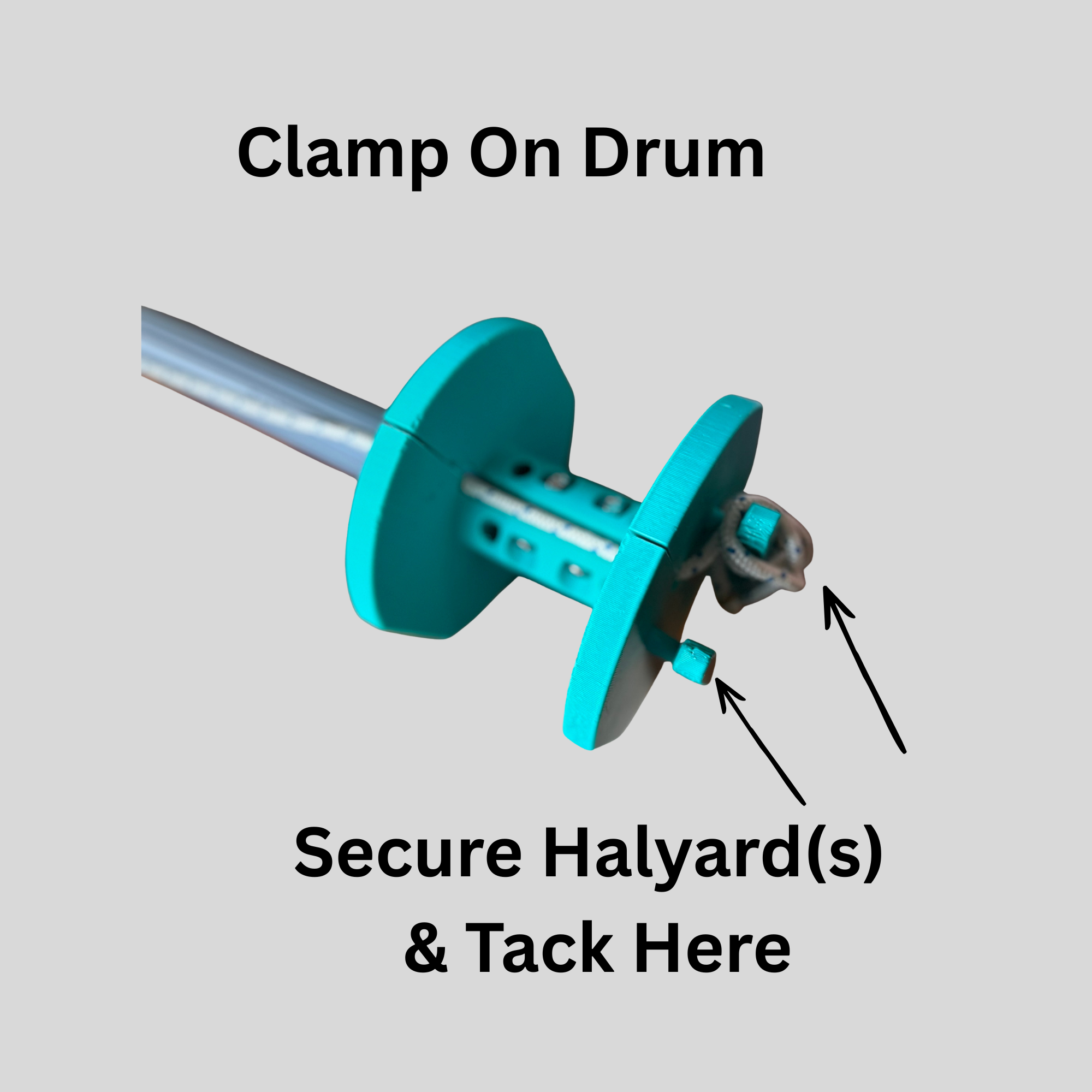
A cleaner approach removes those problem points entirely. External halyards eliminate the swivel and the common wrap issue that follows it. An axial bearing free drum removes one of the most failure-prone rotating elements in traditional furling hardware. Short interlocking foil sections improve packaging and handling while creating torsional continuity through the full stay length.
This is where design choices stack together. A corrosion-free part is useful. A corrosion-free system with no bearings to seize and no halyard wrap issue is far more useful.
Installation is part of performance
Boat owners often separate installation from operation, but they are connected. A furling system that installs from the deck, in or out of the water, without rigging removal or mast climbing is not just easier to buy. It is easier to live with.
The usual alternative can involve rigging labor, scheduling, safety concerns, and added downtime. For DIY owners, that may be enough to delay the upgrade entirely. For owners paying a yard or rigger, labor can rival or exceed the value of the hardware difference.
A modular design changes that equation. Short foil sections, pre-determined stay length packages, and clamp-on installation reduce cutting, guesswork, and risk. If the system arrives sized for common lengths from 20 to 50 feet, the buyer gets a more predictable path from carton to sail handling. That matters for recreational sailors who want the benefit of furling without turning the project into a rigging event.
What to look for when comparing systems
If you are shopping this category seriously, compare more than price and stated compatibility. Ask what material is carrying the load, whether the drum uses bearings, whether the design can wrap a halyard, and what the install requires. Those answers tell you more than a polished spec sheet.
Also look at shipping and handling logic. A system built from 12-inch foil sections that interlock every 6 inches solves real logistics problems while adding strength through the assembly. A complete unit that ships in a compact carton under 40 pounds is easier to receive, move, and install than long rigid sections that demand more space and care.
Customization can matter too, though only after the mechanical case is solid. Color options are useful for matching a boat's setup, and highly visible top assemblies can add recognition value in certain use cases. But these features should sit on top of sound engineering, not distract from it.
Where corrosion free roller furling fits best
This design approach fits especially well for hands-on sailboat owners, coastal cruisers, and small- to mid-size boats where simplicity and weight matter. It also makes sense for retrofit situations where the owner wants to avoid mast climbing, rig removal, or specialized labor.
That said, every boat is different. Stay length, sail plan, usage frequency, and how the boat is rigged all affect the right setup. Some owners prioritize legacy hardware familiarity. Others prioritize lower maintenance and easier installation. The right answer depends on whether you want to preserve an older mechanical model or move to a simpler one.
3DFurler is built for owners who prefer the second option: lighter, corrosion-free, installation-friendly hardware designed around eliminating common furling headaches instead of managing them.
The best marine hardware usually looks obvious after you understand it. Fewer vulnerable parts. Smarter material use. Less labor to install. Less to seize, wrap, or corrode later. If your furling system has to earn its place on the boat, that is the standard worth using.